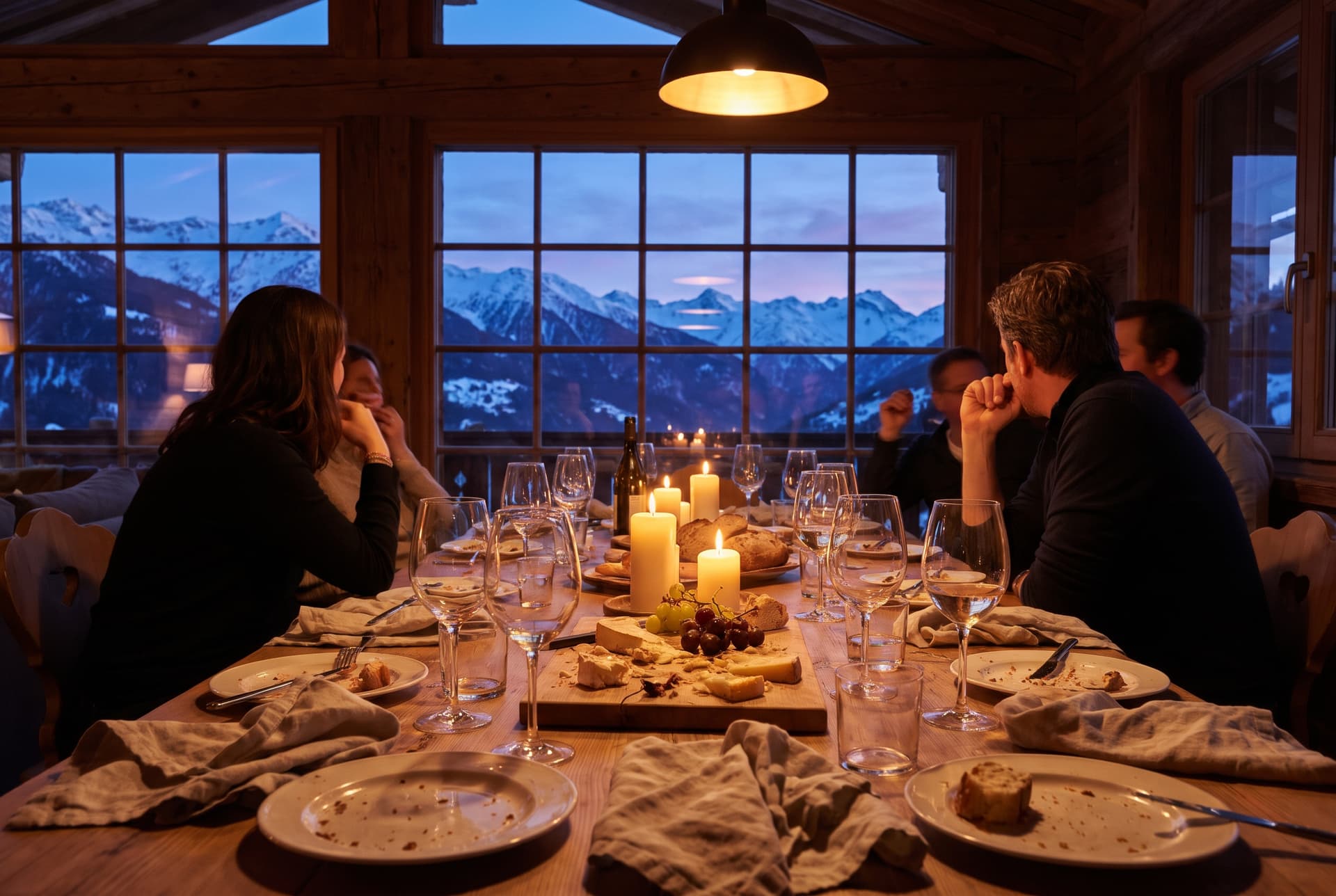
The short answer: tipping in a catered chalet is optional, but it's customary to leave something for your hosts at the end of a good week. Many guests leave around €10–20 per person, collected in an envelope and handed over on the last evening. Restaurants in France already include service, so there you only need to round up.
A catered chalet is someone's place of work as well as your home for the week, which raises a few questions that rarely get a straight answer. Here's what's expected, from tipping to changeover day.
Should you tip chalet staff?
Yes, if you've been looked after well, although nobody will expect it or mention it. Chalet hosts and chefs work long days: breakfast, afternoon tea, a three-course dinner, then cleaning and preparing for the next day. A tip is a way of saying thank you.
It's never added to your bill, and it isn't part of their pay in the way a service charge would be. If the week fell short, you don't need to leave anything, but it's better to raise problems with the host or manager during the stay, while there's still time to put them right.
How much to tip
There's no official figure, and operators tend to stay vague. Two rules of thumb come up again and again:
- Per guest: around €10–20 per person for the week is common in the bigger catered chalets.
- Per host: some operators suggest a figure for each member of staff instead, which works better for small groups.
The per-host approach matters most in a luxury chalet with a private chef and a small group. Six guests at €15 each is a modest thank-you for a chef who has cooked for you all week. Think about how much work was involved, and adjust.
If you're self-catering and have a host who checks in during the week, a smaller tip is a nice touch. Many hosts are also glad of unopened food and drink left behind at the end of the stay.
How to give it
There's no formal process, but most groups do it the same way:
- Collect cash in euros during the week, so nobody is scrambling on the last morning.
- Use an envelope and a card with a few words about what you enjoyed. Hosts value the note as much as the money.
- Hand it over on the last evening or at breakfast on departure day.
- Address it to the whole team if you've had a chef, a host and a driver, or ask the manager how tips are shared.
Tipping elsewhere in the resort
Restaurants. Service is included in French menu prices, so a tip isn't expected. Leaving a few euros or rounding up for good service is normal. When paying by card, you may need to ask for a tip to be added, as machines don't always prompt you.
Ski instructors. Tipping is less common than in North America. Families often give a small thank-you to an instructor who has taught their children all week, and private instructors you've had for several days appreciate it too. For a single group lesson, it isn't expected.
Transfer drivers. Not expected, though a few euros for help with heavy bags and skis is always welcome.
Chalet etiquette: the unwritten rules
Changeover day
Most chalets run Saturday to Saturday, although some use Sunday. Expect to arrive from late afternoon and leave by mid-morning, because the team needs the hours between to clean and prepare for the next group. If your flights don't fit, ask about luggage storage or a late check-out before you travel rather than on the day.
The staff night off
Most catered chalets have one or two evenings a week with no dinner. Your host will usually recommend somewhere to eat, and may book it for you. Some chalets leave a self-serve supper such as raclette instead. In the peak weeks, book restaurants early, as every catered chalet in the village has its night off too.
Boots, skis and the boot room
Ski boots stay in the boot room, and so do wet gloves and helmets. Chalet floors are often wood or pale stone, and walking through in boots is the quickest way to annoy your host. Most boot rooms have heated racks and dryers, so you'll start the next day with warm, dry kit.
Drinks
Catered chalets are often licensed, so house wine is included with dinner and other drinks may come from a chalet bar. Some don't allow you to bring your own alcohol, including duty-free, so check the rules before you pack bottles.
Respect the home
Many chalets are family homes or have owners who visit. Use coasters, keep the hot tub cover on when it's not in use, report breakages rather than hiding them, and keep the noise down late at night, especially in a chalet split into apartments. A damage deposit is usually taken with your balance and returned after you leave.
Tourist tax
The taxe de séjour is a local tax charged per person, per night by each commune and collected by your host. Many chalets include it in the final balance, but some add it on arrival, so check your booking terms.
A few small things that hosts love
- Tell them about allergies and dietary needs before you arrive, not at the first dinner.
- Let them know if you'll miss breakfast or come back late, so nothing goes to waste.
- Say so when a meal was excellent. A kind word in the moment means a lot.
- Leave a review after the stay. For independent hosts, it matters as much as the tip.
Because every chalet on Peak & Chalet is booked directly with its host, you can ask about the night off, the drinks policy and the check-in times before you book. If you're still deciding between styles of stay, our guide to catered vs self-catered chalets explains what each includes.
Ready to choose? Search all chalets and message hosts directly.