Savoyard Food: The Dishes to Try on Your Ski Holiday

Fondue, raclette, tartiflette and the local berthoud, plus the cheeses, wines and sweet things worth knowing about in Morzine and Les Gets.

Insider4 min read

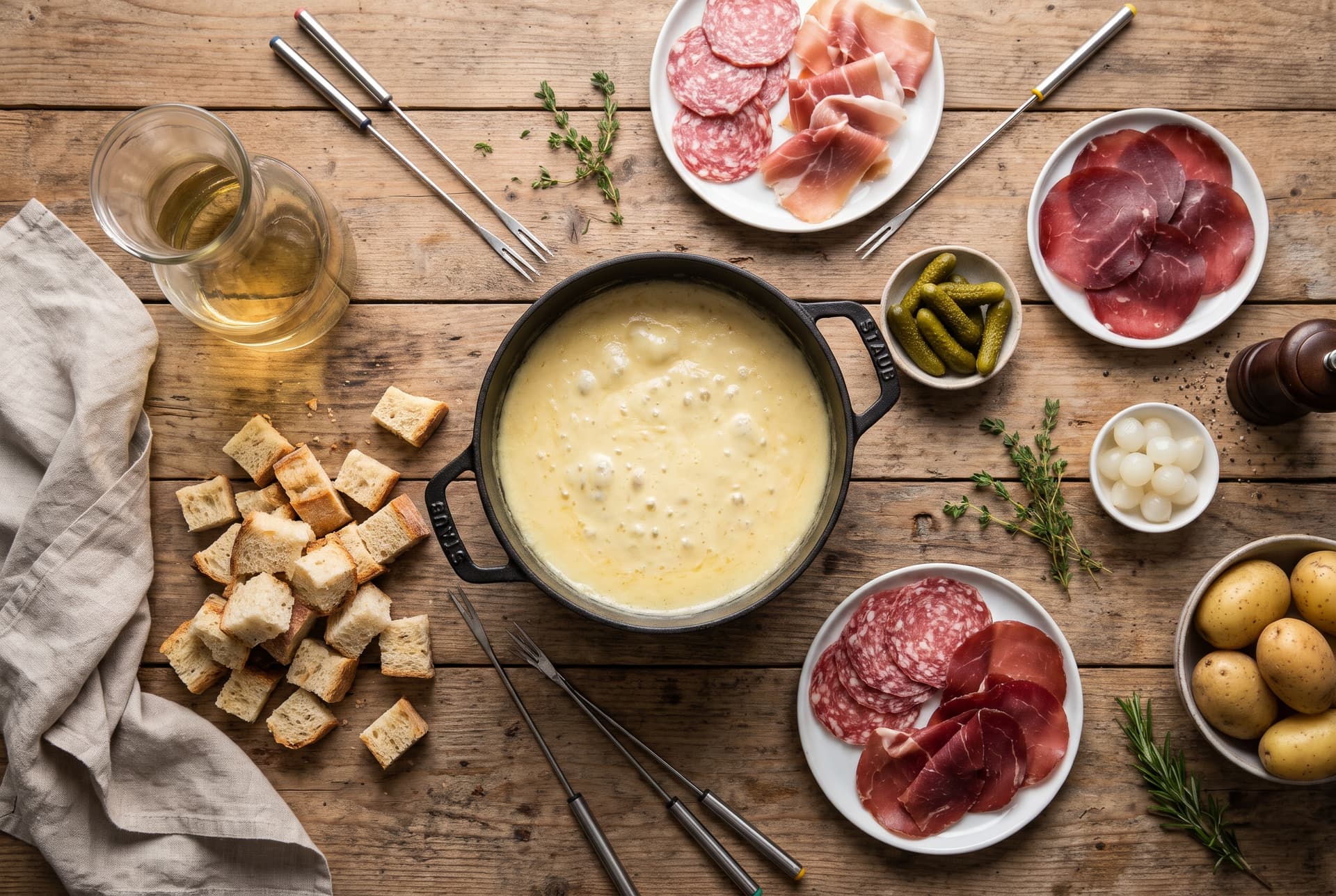
A cheese fondue on a wooden table, seen from above, with bread, wine and charcuterie

The short answer: the dishes to try are fondue, raclette and tartiflette, the three Savoyard classics, plus the berthoud, a local speciality around Morzine made with Abondance cheese. Drink a crisp local white with them, and finish with a blueberry tart or a small glass of génépi.

Savoyard cooking was made for cold days in the mountains: cheese from the summer pastures, potatoes, cured meats and white wine. It's simple, generous food that tastes best after a day outside. Here's what to order, and what to look out for.

Melted raclette cheese being scraped onto a plate of potatoes

The classics

Fondue

A pot of cheese melted with white wine and a little garlic, set over a flame in the middle of the table. You dip cubes of bread on long forks. The usual Savoyard blend uses mountain cheeses such as Beaufort, Comté and Emmental. Tradition says that if you lose your bread in the pot, you buy the next round.

Raclette

A half wheel of cheese is melted under a heater, and the soft layer is scraped onto boiled potatoes, with cured ham, salami, cornichons and pickled onions. Many chalets have a tabletop raclette grill, and it's a popular choice for the staff night off.

Tartiflette

Potatoes, bacon lardons, onions and cream, topped with a whole Reblochon and baked until the rind turns golden. It's the most filling of the three, so you may not need a starter.

A tartiflette in a cast-iron dish on a sunny mountain terraceA spoonful of tartiflette with strings of melted cheese

The local speciality: berthoud

Around Morzine and Les Gets, you're in the Chablais, the northern corner of Haute-Savoie, and this is its signature dish. Abondance cheese is baked in a small individual porcelain dish rubbed with garlic, with Savoie white wine and a few drops of Madeira. You dip potatoes or bread into it. It's simpler and richer than fondue, and each person gets their own.

The berthoud's recipe is protected as a traditional speciality, so look out for it on menus in the valley.

The cheeses to know

  • Reblochon: soft and creamy, with a washed rind. The star of tartiflette, and good on its own.
  • Abondance: a firm, nutty cheese from the valley of the same name, close to Morzine. Used in the berthoud.
  • Tomme de Savoie: a mild, everyday mountain cheese with a grey rind.
  • Beaufort: a firm, fruity Alpine cheese, often in fondue.

Morzine has a cheese cellar where you can see Tomme, Reblochon and Abondance being made and buy some to take home. Cheese travels well in a cool bag, and it makes a better present than most airport shopping.

Wheels of mountain cheese ageing on wooden shelves in a cellarA cut wedge of soft mountain cheese on a wooden boardA market stall selling local cheese and saucisson

Beyond the cheese

  • Diots: Savoie pork sausages, often cooked in white wine and onions, and served with crozets, small square buckwheat pasta.
  • Charcuterie: air-dried ham, saucisson and smoked sausages, served on boards everywhere.
  • Lake fish: in the restaurants towards Lake Geneva, look for perch fillets, a valley favourite.
  • CroĂ»te au fromage: bread soaked in white wine, topped with cheese and baked, sometimes with ham and an egg.

Sweet things

  • Tarte aux myrtilles: a blueberry tart, on almost every mountain restaurant menu.
  • GĂąteau de Savoie: a light, airy sponge cake.
  • Bugnes: fried dough sprinkled with sugar, especially around carnival time.
A slice of blueberry tart with coffee and a small glass of liqueur

What to drink

  • Savoie whites: crisp, light and made for cheese. Ask for a Vin de Savoie such as Apremont or Chignin.
  • Chablais wines: the vineyards on the shores of Lake Geneva grow Chasselas, a gentle, fresh white that's a natural match for fondue and berthoud.
  • Mondeuse: a peppery local red, if you want a red with your raclette.
  • GĂ©nĂ©pi: a herbal mountain liqueur made from Alpine plants, served as a digestif.
  • Vin chaud: hot spiced wine, the classic aprĂšs-ski warmer.

Locals will tell you to drink white wine or tea with fondue, not cold water or beer, which they say makes the cheese sit heavy. Whether that's true or not, a glass of local white suits the food.

Where to try it

Every mountain restaurant serves the classics, and many of the best are in old farmhouses in the valley. Our guide to where to eat in Morzine and Les Gets has our picks. In a catered chalet, ask your host whether they cook a Savoyard night, or book a fondue for the staff night off.


Hungry for the mountains? Search all chalets in Morzine and Les Gets.

Frequently asked questions

What is Savoyard food?

It's the traditional mountain cooking of the Savoie and Haute-Savoie, built on local cheeses, potatoes, cured meats and white wine. Fondue, raclette and tartiflette are the best-known dishes.

What is the difference between fondue and raclette?

Fondue is a pot of cheese melted with white wine, shared at the table, and you dip bread into it. Raclette is a wheel or slices of cheese melted under a heater and scraped over potatoes, served with cured meats and pickles.

What is a berthoud?

A speciality of the Chablais, the corner of Haute-Savoie around Morzine. It's Abondance cheese baked in a small individual dish with garlic, Savoie white wine and a splash of Madeira, eaten with potatoes.

What cheese is used in tartiflette?

Reblochon, a soft, washed-rind cheese from Haute-Savoie. It's baked whole or halved on top of potatoes, bacon lardons, onions and cream.

What wine goes with fondue?

A crisp local white, such as a Vin de Savoie. Around Lake Geneva, near Morzine, the Chablais produces its own whites from the Chasselas grape, which suit cheese dishes well.

Is Savoyard food suitable for vegetarians?

Fondue and many cheese dishes are vegetarian, but tartiflette and raclette are usually served with bacon or cured meats. Most restaurants will leave the meat off if you ask, though some cheeses are made with animal rennet.