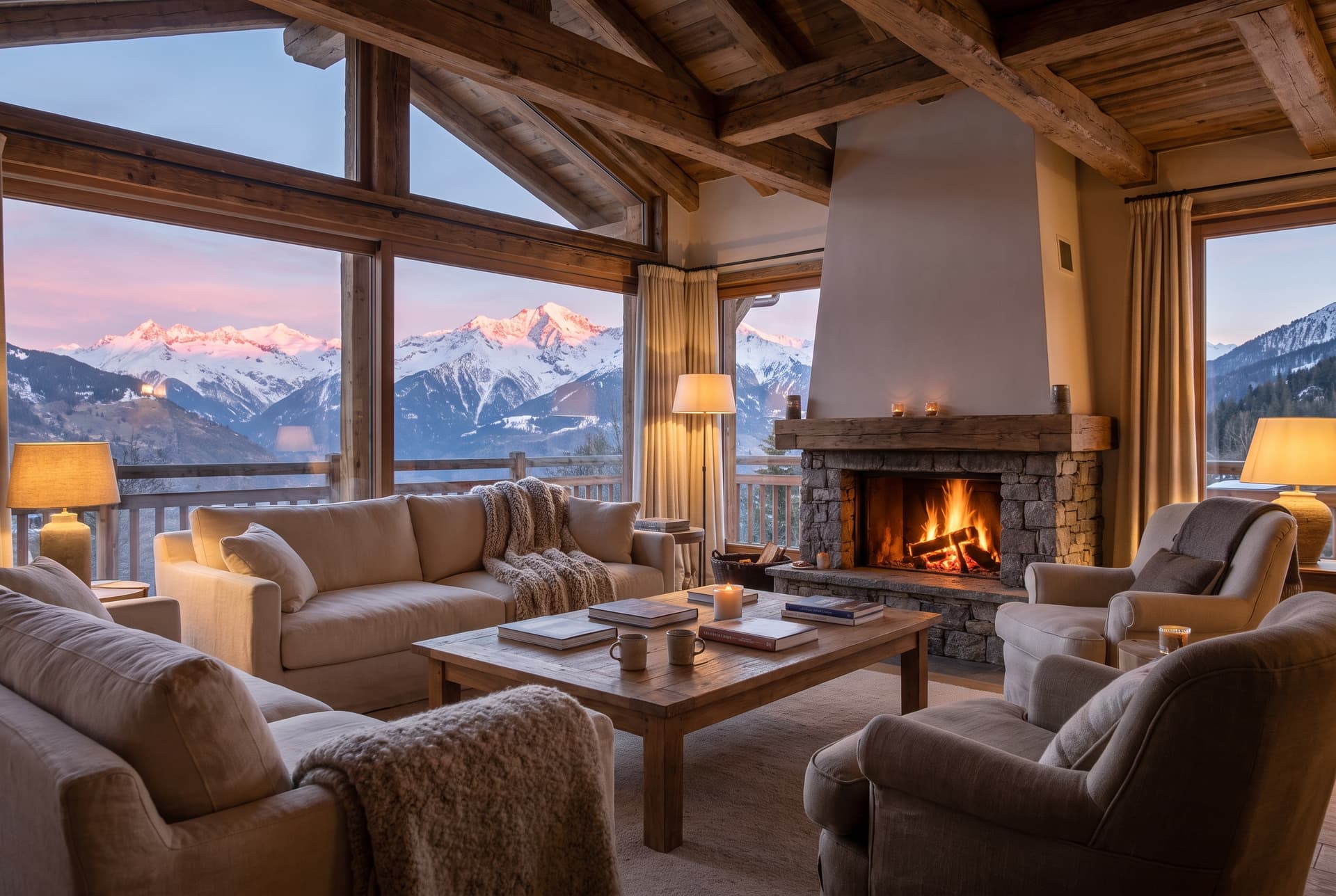
The short answer: a luxury chalet isn't about gold taps or a long list of extras. It's about the details that make a week in the mountains easier and more comfortable: a great location, warm boots every morning, a bathroom for every bedroom, space for everyone to relax together, somewhere to soak tired legs, and a host who has thought of things before you have to ask.
Chalet listings are full of words like "exclusive", "boutique" and "premium". This guide cuts through them, so you know which features genuinely change your holiday and which questions to ask before you book.
Location comes first
No amount of interior design makes up for a long trudge to the lifts in ski boots. Location is the single biggest luxury in a ski chalet, and it's worth understanding what the descriptions actually mean.
- Ski-in, ski-out should mean you can ski to the door at the end of the day and ski away from it in the morning. Ask whether that's true in all snow conditions, and whether it relies on a particular piste being open.
- Close to the lifts can mean anything from a short stroll to a bus ride. Ask how long the walk takes in ski boots, and whether it's uphill.
- A private driver or shuttle can make a chalet further out work beautifully, especially for families. Check when it runs and whether it's included.
Then think about what your group wants after skiing. A chalet in the centre puts restaurants and bars on your doorstep; one on the edge of the village gives you quiet, views and a sense of escape.
A proper boot room and drying room
It's not glamorous, but the boot room is where a good chalet shows its quality. After a day on the mountain, you want somewhere to take off wet kit without traipsing snow through the house, and you want everything dry and warm by the morning.
Look for heated boot racks, glove and helmet dryers, space for everyone's skis and boards, and ideally a separate entrance straight from the outside. A well-run boot room makes mornings calmer, especially with children, and it's the feature guests remember long after the holiday.
Bedrooms and bathrooms
A good night's sleep matters more in the mountains than almost anywhere else. The details worth checking:
- A bathroom for every bedroom. En suites stop the morning queue and make sharing a chalet with friends far easier.
- Comfortable beds and good linen. Ask about bed sizes and whether twin beds can be made up as doubles.
- Blackout blinds or shutters, for early nights and lie-ins.
- How the rooms are split. Bunk rooms are brilliant for children but not for adults, so check the layout matches your group.
Bedrooms with a view are lovely, but in practice, warmth, quiet and a good shower make the bigger difference after a long day on the slopes.
Space to be together
The heart of a great chalet is a living space where the whole group can gather: a big sofa, a fireplace or wood burner, and a dining table that seats everyone at once. Ski days are full of separate adventures, so dinner around one table is often the highlight of the week.
For larger groups or families, a second, smaller sitting room or snug is a real luxury. It gives children somewhere to watch a film, or adults somewhere quiet to read, without anyone feeling pushed out.
Hot tubs, saunas and spas
Nothing beats sinking into a hot tub under the stars after a day on the mountain. Wellness facilities are where chalets differ most, so ask the right questions:
- Is it private? A hot tub or pool shared with other chalets or apartments is a very different experience.
- When can you use it? Some have set hours, especially if they're shared.
- Is it ready when you arrive? Hot tubs and pools should be heated and cleaned before your stay, not switched on once you've checked in.
- Are treatments available? Many hosts can arrange massages in the chalet, which is a lovely treat midway through the week.
A sauna or steam room is just as good for tired legs, and often easier to use on cold, snowy evenings. If wellness is a priority, prioritise a private hot tub or sauna over a larger, shared spa.
Food: catered or self-catered
In a catered chalet, a chef or host cooks for you, usually breakfast, afternoon tea and dinner on most days, often with wine included. At the top end, that can mean restaurant-quality dinners at your own table. It's the most relaxing option, especially for larger groups.
In a self-catered chalet, luxury means a properly equipped kitchen: good knives and pans, a dishwasher, a decent coffee machine and enough space for several people to cook together. Some hosts can arrange a chef for a night or two, or a delivery of groceries before you arrive.
Not sure which suits you? Our guide to catered vs self-catered chalets explains the real costs of each.
The service that makes it easy
The best chalets feel effortless because the host has done the thinking for you. This is where luxury really shows. Look for, or ask about:
- Airport or station transfers, timed to your arrival.
- Ski hire fitted in the chalet, so nobody spends the first morning queuing in a shop.
- Lift passes and ski school booked and waiting for you.
- Restaurant bookings and local tips, from the best mountain lunch to the quietest pistes.
- A host who replies quickly, before and during your stay.
The practical details
Some of the most useful features never make the headline photos:
- Reliable wifi for anyone who needs to work or stream in the evenings.
- Parking or a garage, and electric car charging if you're driving.
- A lift between floors in larger chalets, for luggage, older guests or anyone with limited mobility.
- Good heating and insulation, so the whole chalet is warm, not just the living room.
What isn't worth paying extra for
Some features look impressive but rarely get used. A cinema room is lovely, but if your group skis all day and dines together in the evening, it may sit empty. The same goes for a huge games room for a group of couples, or a gym when you're already skiing all day.
Be wary of descriptions that are all adjectives and no detail. A chalet that is genuinely luxurious will tell you exactly what's included: the number of bathrooms, whether the hot tub is private, what the catering covers. If those details aren't there, ask.
Questions to ask the host before you book
- How long does it take to walk to the nearest lift in ski boots?
- Does every bedroom have its own bathroom?
- Is the hot tub or pool private, and when can we use it?
- What's included in the catering, and is wine included?
- Can you arrange transfers, ski hire and lift passes?
- Is there a boot room with heated racks?
For more on choosing well, see our guide to choosing your first ski chalet.
Book directly with the host
The easiest way to find out whether a chalet lives up to its description is to ask the people who run it. Every chalet on Peak & Chalet is booked directly with its host, so you can ask about the boot room, the hot tub or the walk to the lifts before you commit, and often get a better rate too. Our guide to why booking direct saves money explains how.
Ready to find your chalet? Browse all chalets and message hosts directly.